

Ecosystem
The Chain in Action
The projects listed on this page are built on CollegenZ and use its infrastructure to handle credentials, funding, engagement, or some combination of the three.
Coins For College
Economy
Mint Token
Institution mints campus token
Earn
Attendance, milestones, participation
Spend
Dining, printing, events, bookstore
On-Chain
Activity recorded as verifiable history
Check
Scholarship conditions verified by contract
Release
Funds disbursed automatically
Each participating campus mints its own token on CollegenZ and defines the rules of its own token economy. Students earn tokens through attendance, academic milestones, and participation in campus activities, and spend them across campus services including dining, printing, event access, and bookstore purchases. The earning and spending activity is recorded on-chain, which means the student's engagement history is portable and persists as a verifiable record even after they leave the institution or the campus changes its internal systems.
Scholarship conditions are encoded in contracts and disbursement is automatic when the contract determines that the conditions have been satisfied. The finance office does not need to manually verify eligibility or initiate transfers because the contract handles both the verification and the release of funds as a single operation.
Rewards For Education
LiveTransaction log - scholarship disbursement sequence
RFE focuses on student success. College Coins empower universities to create digital economies that fund scholarships, research, and campus operations. rewardsforeducation.com
QuestBoard
Beta~200 active users across 2 campuses
Distributed Systems Reading Group
ActiveConditions
- 1Read and annotate 6 assigned papers on consensus algorithms and distributed storage
- 2Attend at least 5 of 8 weekly discussion sessions (attendance logged on-chain)
- 3Submit a written reflection on one paper of your choice
- 4Peer-review one other participant’s reflection
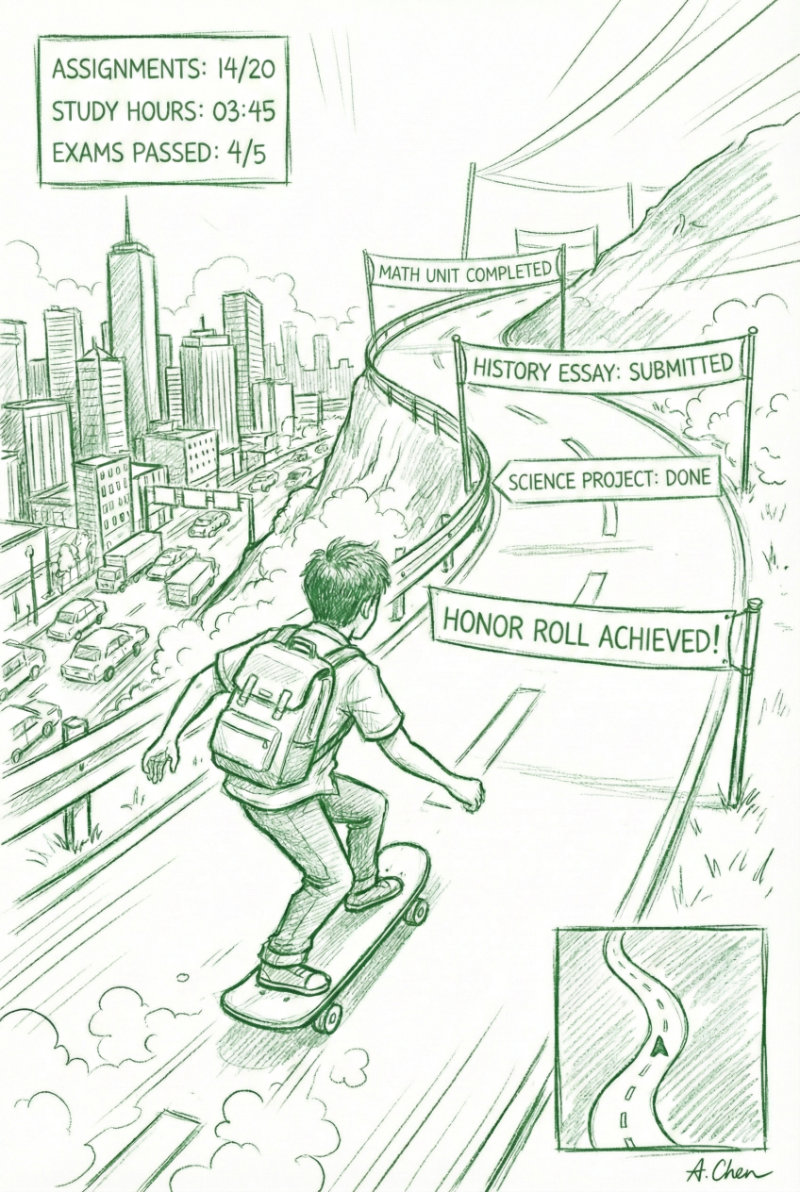
Quest completion builds a portable signal.
The completion data from QuestBoard is composable, which means that other applications on CollegenZ can read a student's quest history as a signal. A grant pool on Catalyst Pools could reference QuestBoard completions as part of its eligibility criteria, or an employer verifying credentials through Transcripta could see a pattern of consistent follow-through across multiple quests over several semesters. The quest completion is not a badge that sits in isolation but a data point that other systems on the chain can query and act on.
Catalyst Pools
Testnet2 active pools
Anatomy of a pool
A campus, alumni association, or corporate sponsor deposits funds into the contract. Pools can be one-time or recurring with a defined refill cycle.
Defined at pool creation. Rules can reference on-chain data such as attendance records, enrollment status, or quest completions, or they can require manual reviewer input, or both.
Students submit proposals directly to the pool. Each submission is recorded as a transaction.
Designated reviewers evaluate proposals and record their decisions on-chain. The approval threshold is configurable at pool creation, for example 2-of-3 reviewers must approve.
Automatic when the approval threshold is met. Funds transfer from the pool contract to the student’s wallet. Every disbursement is traceable from the original deposit.
The pool’s rules, submissions, reviews, and disbursements are all on-chain and visible to anyone with access to the chain. Sponsors can audit the entire lifecycle of their funds.
Transcripta
TestnetPiloting with 3 institutions
Issuance
A university issues a certificate through Transcripta's interface. The credential record is written to CollegenZ containing the issuing institution's identifier, the recipient's wallet address, the credential type, the issuance date, and a hash of the credential metadata. Transcripta provides the issuance tools but does not store the credential. The record lives on the chain.
Verification
An employer queries the chain using the student's wallet address or the credential identifier. The chain returns the record: who issued it, when, what type, whether it has been revoked. The query requires no API key, no vendor account, and no contact with the issuing institution. If the issuing platform has shut down entirely the verification still works because the record does not depend on the platform.
MentorChain
Live~50 active mentor-mentee pairs
Mentoring that leaves a trail
Every session is a two-step handshake: the mentor creates a log, the mentee confirms it, and a timestamped record lands on-chain. Built to avoid admin overhead and redundant communication.
01 Mentor logs a session
02 Mentee confirms attendance
03 Record written to chain

Over a semester this produces a verifiable history of mentoring activity including frequency and subject areas without exposing private conversation content. For mentors it serves as documented proof of service that counts toward teaching portfolios or community contribution records. For mentees it is portable evidence of initiative that any other application on CollegenZ can reference.
StakeMyResearch
Testnet12 active bounties
The problem
Undergraduate research contributions are routinely uncompensated and unrecorded. A student who cleans a dataset or replicates an experiment or conducts a literature review for a faculty research project typically receives no formal credit and no payment for work that directly advances the research. The contribution exists in the faculty member's memory and nowhere else, and if the student later needs to demonstrate research experience to a graduate program or employer there is no verifiable record of what they did.


The mechanism
A faculty member or research lab posts a task on StakeMyResearch and locks TUIT or campus tokens in the contract as the bounty. Tasks can range from literature reviews to dataset preparation to experiment replication to survey design. Students claim a task, complete the work, and submit it for review. Designated reviewers evaluate the submission and either approve it or request revisions, with a configurable threshold such as 2-of-3 reviewers approving before payout is triggered. When the threshold is met the locked funds transfer automatically to the student's wallet. Every submission, review, and payout is timestamped on-chain, which produces a verifiable research contribution record that the student carries forward.
PassPort
LiveUsed at 40+ events
When a campus hosts a workshop or hackathon or guest lecture or cultural event, PassPort issues an on-chain participation receipt to each attendee's wallet. These receipts are functional records that accumulate over time and can be referenced by other systems on the chain. Event organizers get verified attendance data and students get a portable record of participation that does not depend on anyone maintaining a spreadsheet.
What receipts can unlock
TermFi
TestnetPiloting with 1 institution
How a tuition installment plan works on TermFi
A student enrolls in an installment plan for the semester’s tuition through TermFi’s interface.
The total amount, number of installments, payment dates, grace period, and late payment terms are encoded in a contract.
Each installment payment is a transaction on CollegenZ. The contract tracks payments against the schedule automatically.
When a payment is made the contract disburses the corresponding amount to the institution’s wallet.
If a payment is late the contract applies the grace period and escalation logic defined in the terms. The student sees the same rules the institution sees.
When all installments are complete the contract marks the plan as fulfilled and the record remains on-chain as proof of completion.
TermFi also supports peer-to-peer lending circles, which already operate informally on many campuses as a way for student groups to pool and rotate funds. The informal version runs on trust and is prone to disputes when someone misses a contribution or the rotation order is contested. TermFi formalizes the arrangement with transparent rules and on-chain accounting: contribution amounts, rotation schedule, and payout order are all defined in the contract and visible to every participant.

Every payment is a verifiable on-chain record.
Building on CollegenZ
The projects on this page represent the early activity on a network that is designed to support a much broader range of education applications. CollegenZ provides the settlement layer, the fee economics, and the native contract patterns, and the teams building on it decide what to do with that infrastructure.
If you are building something that handles credentials, funding, engagement, or any other education workflow that would benefit from a shared on-chain data layer with fee economics tuned for high-frequency low-value transactions, CollegenZ may be the right place to build it.